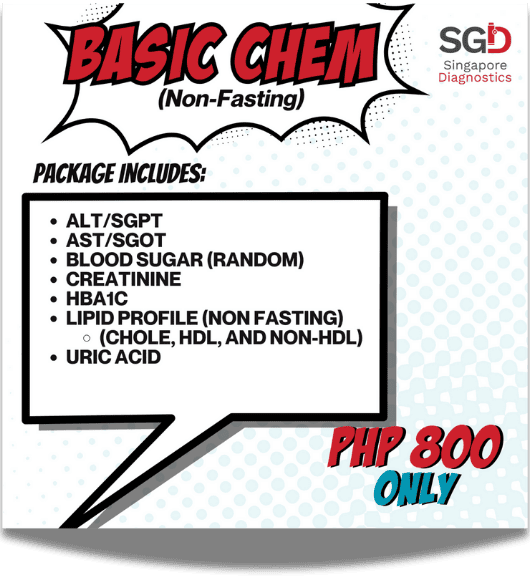
When you get a lab test, you want results you can trust. Choosing a laboratory that meets high international standards makes a big difference. The facility shown is the first CAP Accredited Filipino Laboratory in the Philippines, which means it follows strict rules for safety, accuracy, and quality.
This accreditation from the College of American Pathologists shows that the lab uses reliable equipment and trained staff. With this level of quality, you can feel confident in every lab test result you receive.
How Does an HIV Screening Test Work?
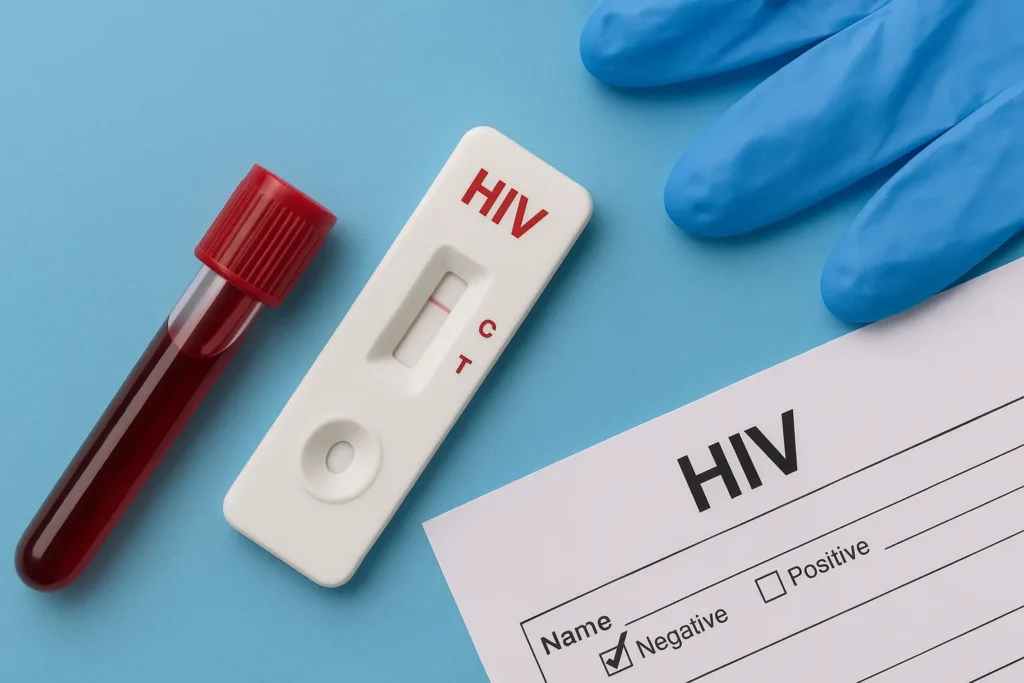
An HIV screening test works by checking a small sample of your blood, a finger-prick drop, or saliva for signs of HIV. The sample is tested for HIV antibodies or antigens. Rapid tests can show results in minutes, while a laboratory HIV test may take a few days because it goes through careful checking. If the first test shows a positive result, a follow-up test is needed to confirm it.
HIV screening tests check your blood, saliva, or urine to find signs of the virus. These tests look for antibodies your body makes to fight HIV, antigens like the p24 protein, or the virus itself. A laboratory HIV test is more accurate because it uses special machines and trained staff. NAT tests can find HIV earlier because they look for the virus’s RNA, but they are not used for everyday screening.
Types of HIV Screening Tests
Antibody tests: Look for the antibodies your body makes to fight HIV.
Antibody/antigen tests: Check for both antibodies and the p24 antigen, helping detect HIV earlier.
NAT tests: Look for the virus’s genetic material. These are very sensitive and helpful after a recent exposure.
How Are the Tests Are Done?
- Blood draw: Taken from your arm and sent to a lab.
- Finger stick: A small drop of blood for rapid testing.
- Oral fluid: A saliva sample is collected.
- At-home tests: Use a finger stick or a swab. Results appear in minutes.
What to Know About Results?
- A positive result needs a follow-up test.
- Each test detects HIV at different times, so testing at the right time matters.
- A positive HIV test does NOT mean AIDS. Early treatment helps you stay healthy.
Why Is an HIV Screening Test Important?
An HIV screening test is important because it helps find the virus early. Early testing allows you to start treatment quickly, protect your loved ones, and make safer health choices. A clinical research laboratory can give accurate results that guide proper care.
For Personal Health
Early treatment: Finding HIV early helps you start medicine right away, which leads to better health and stops the virus from becoming AIDS.
Stronger immune system: Treatment helps raise your CD4 cells, which protect you from sickness.
Health monitoring: Regular testing shows if your HIV medicines are working and lets your doctor change your plan if needed.
For Preventing Transmission
Stops the spread: Many people do not know they have HIV. Testing helps prevent unknowingly passing the virus to others.
Protects partners: Knowing your status helps you take steps like using condoms or taking medicine to keep the virus low or undetectable, which stops transmission.
Protects babies: Pregnant individuals who get tested early can start treatment to lower the risk of passing HIV to their baby.
For Better Life Decisions
Informed choices: A negative test result helps you make safer decisions, like using PrEP to prevent HIV.
Peace of mind: Knowing your status helps reduce worry, especially for people at higher risk.
Who Should Get an HIV Screening Test?
Everyone should get an HIV screening test at least once, and people with higher risks should get tested more often. This helps keep you healthy and protects others. Many clinics use laboratory outsourcing to make sure your test is checked quickly and accurately.
Who Should Get Tested?
Everyone ages 13 to 64: Experts recommend that all people in this age group get tested at least one time in their life.
People with higher risk:
- Had unprotected sex.
- Have more than one partner.
- Had sex with someone who may have HIV.
- Shared needles for drugs or tattoos.
- Had another STI, hepatitis, or tuberculosis.
Gay and bisexual men:
Testing every 3 to 6 months is helpful because the risk of HIV may be higher.
Pregnant individuals:
Testing is part of routine prenatal care to protect both the parent and the baby.
Older adults with risks:
Anyone over 64 who has risk factors should ask their doctor about testing.
After a possible exposure:
If you think you were exposed to HIV, you should talk to a doctor right away to check if you need PEP (post-exposure medicine) and get tested.
Types of HIV Screening Tests
There are three main types of HIV screening tests. Each one looks for different signs of the virus, and each has a different waiting time for results. Many clinics check HIV the same way they check for other infections during an STD test, but the methods may vary.
Quick Table Overview
| Test Type | What It Detects | Result Time |
| Rapid Test | Antibodies | 20 minutes or less |
| ELISA / Lab Test | Antibodies and antigens | 1 to 3 days |
| NAT (Nucleic Acid Test) | The actual virus (RNA) | Same day to a few days |
Antibody Tests
- Look for HIV antibodies, which your body makes when it tries to fight the virus.
- Can use a small blood sample or saliva.
- Often available as rapid tests or at-home self-tests.
- Good for routine screening but may not show early infection right away.
Antigen/Antibody Tests
- Also called 4th-generation tests because they look for both antibodies and the p24 antigen, a part of the HIV virus.
- Can find HIV earlier than antibody-only tests.
- Usually done in a lab using blood from a vein.
- More accurate than finger-prick versions.
Nucleic Acid Tests (NATs)
- Also called viral load tests because they look for the virus’s genetic material (RNA).
- Can detect HIV very early, often 10 to 33 days after exposure.
- Done using a blood sample taken from a vein.
- Mostly used for people with recent high-risk exposure or early symptoms.
When Should You Take an HIV Screening Test?
You should take an HIV screening test at least 2 weeks after a possible exposure, then test again at 3 months to be sure. Most adults who are sexually active should get tested once a year, and some people may need testing more often. If you need help knowing when to test, you can always contact us for guidance.
Recommended Testing Schedule
Once in a lifetime:
Everyone ages 13 to 64 should get tested at least once.
Every year:
People with higher risks, such as those with multiple partners or who have had unprotected sex.
Every 3 to 6 months:
- Sexually active gay or bisexual men
- Anyone who has had more than one partner since their last test
After possible exposure:
- Unprotected sex or a broken condom
- Sexual contact with a new partner
- Any situation where you might have been exposed to HIV
Testing right away helps your healthcare provider decide if you need PEP, a medicine that can prevent HIV after exposure. A final test at 3 months gives the most accurate result.
During pregnancy:
- All pregnant individuals should get tested early.
- Those at higher risk may be tested several times during pregnancy.
FAQs
1. How soon can an HIV screening test detect the virus?
Most tests can detect HIV 2 to 4 weeks after exposure. A rapid test may need more time, while a lab test or NAT can find HIV earlier.
2. Do HIV screening tests hurt?
Some tests use a small finger prick or a simple saliva swab, which causes little to no pain. A blood draw may feel like a quick pinch.
3. Can I take an HIV test at home?
Yes. There are at-home HIV tests that use a finger prick or oral swab. They give results in minutes, but positive results must be confirmed in a lab.
4. Does a positive HIV test mean I have AIDS?
No. A positive result means HIV is present. With early care and treatment, you can stay healthy and prevent the virus from becoming AIDS.
5. How often should I get an HIV screening test?
Everyone ages 13 to 64 should get tested at least once. People with higher risks may need testing every year or every 3 to 6 months. If unsure, you can always contact us for guidance.